
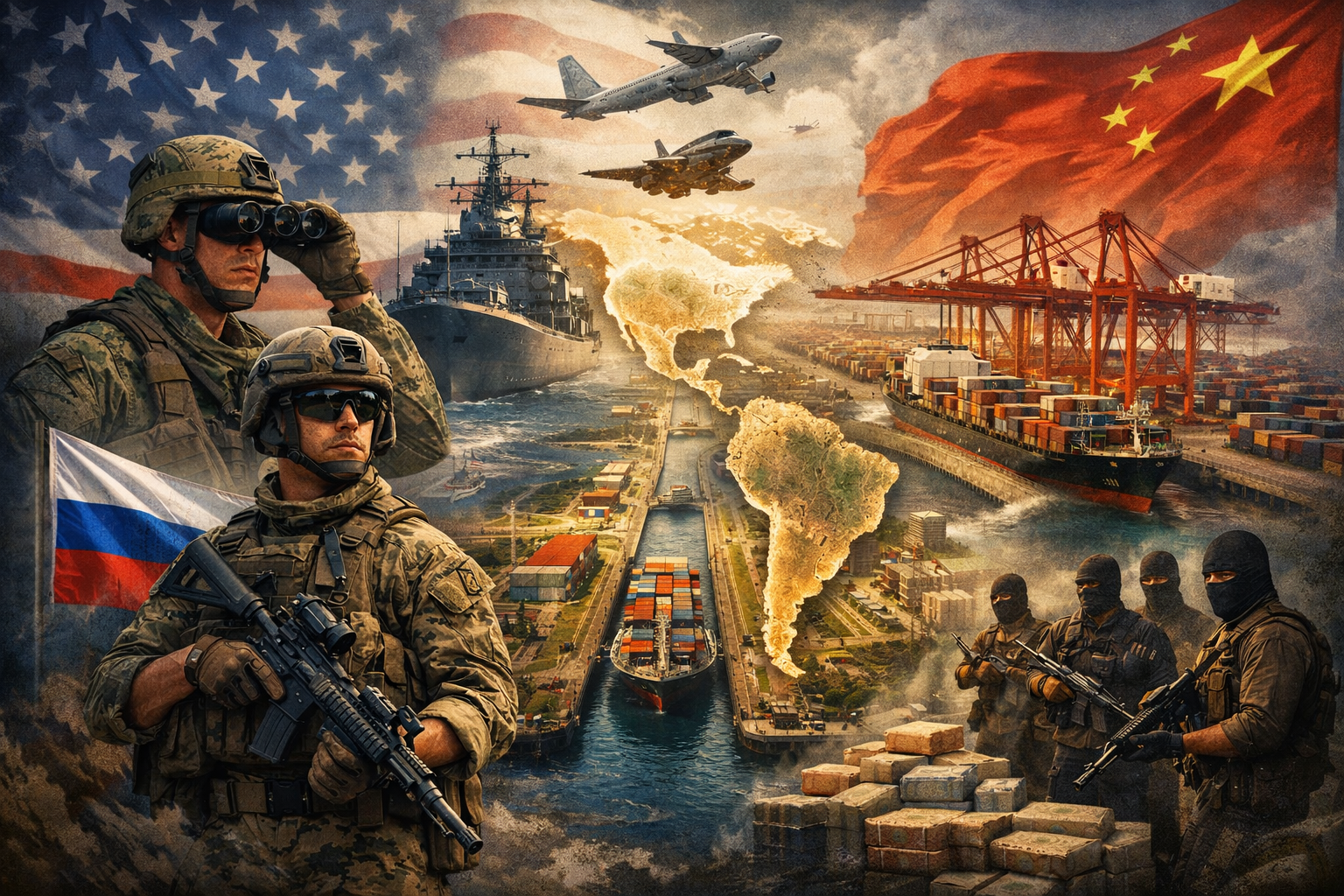
The geopolitical landscape of the Western Hemisphere has shifted rapidly this month. Following the shock capture of Nicolás Maduro in Caracas, the Trump administration has launched a new era of American intervention. This strategy, often called the “Donroe Doctrine,” aims to push out foreign rivals. Specifically, the U.S. wants to remove Russian and Chinese influence from the Americas.
1. Countering the Russian Naval Threat
For decades, Russia used the Caribbean to showcase its military power. However, that presence has recently become a serious structural threat. Moscow is no longer just visiting; it is building a permanent military footprint.
-
The Shadow Fleet: Recently, U.S. forces seized the Russian tanker Marinera. This move signaled that the U.S. will no longer tolerate Russia’s attempts to bypass regional sanctions.
-
Advanced Weaponry: Consequently, the U.S. is tracking Russian S-300 missile systems in the region. Washington fears these assets provide a “lily pad” for Russian missiles near American shores.
2. China’s Economic “Checkmate”
While Russia brings weapons, China brings money and infrastructure. Beijing has spent billions on ports and bridges across Latin America. Furthermore, many of these projects have a hidden military potential.
-
Strategic Ports: The new Chancay megaport in Peru is a major concern. It allows China to bypass U.S.-controlled trade routes. Therefore, the Pentagon views these “commercial” ports as future bases for the Chinese Navy.
-
The Debt Trap: As a result, many nations now owe billions to Chinese state banks. This economic grip gives Beijing immense political leverage over our neighbors.
3. Reclaiming the Panama Canal
The Panama Canal remains the most vital transit point in the world. Nevertheless, China has gained a massive foothold there through port management firms.
-
Security Risks: President Trump argues that Chinese control of canal ports is a national security failure. Thus, the administration is pressuring Panama to cancel these contracts.
-
Direct Intervention: Because of this, the U.S. is using financial threats to force Panama to leave China’s “Belt and Road” initiative. Washington wants to ensure that no hostile power controls the gateway between the two oceans.
4. Mexico on Edge: The Next Frontier
The recent extraction of Maduro has put the entire region on high alert. According to Al Jazeera, the U.S. has warned Mexico, Colombia, and Cuba to “get their act together.”
-
Strikes on Land: CNN reports that President Trump is now ready to “hit land” against Mexican cartels. He previously focused on maritime interdictions, but he now plans to target labs and drug lords directly.
-
Sovereignty vs. Security: Mexican President Claudia Sheinbaum has rejected these threats. She insists that the Americas “do not belong” to any one power. However, Trump continues to pressure her to accept U.S. troops on Mexican soil.
5. Diplomacy Amidst the Chaos
Despite the military threats, some diplomatic doors are opening. The Guardian reports that Trump has cancelled a “second wave” of attacks on Venezuela because the new interim government is cooperating.
-
Meeting Machado: Trump plans to meet Venezuelan opposition leader María Corina Machado next week. This meeting signals a shift toward picking new regional winners.
-
The Oil Factor: Meanwhile, Trump has promised U.S. oil executives “total safety” to invest in Venezuela. He wants to rebuild the country’s infrastructure using American firms rather than Chinese ones.
Conclusion: A Return to Hegemony
In summary, the United States is reclaiming its dominance in the Western Hemisphere. The White House believes that “maximum pressure” is the only way to stop Russian and Chinese expansion. While this aggressive stance creates tension with allies, the administration views it as essential for national survival.